Warrington
How long does resin flooring last, and other questions
Send details about your floor and a specialist firm will reply with what they recommend. There is no charge for the enquiry and no obligation to book any work.
Resin flooring questions answered for Warrington units
Practical answers on how long a resin floor lasts, what causes early wear, cleaning, grip and colour fade in Warrington warehouses, garages and yards.
How long should a resin floor last in a busy unit?
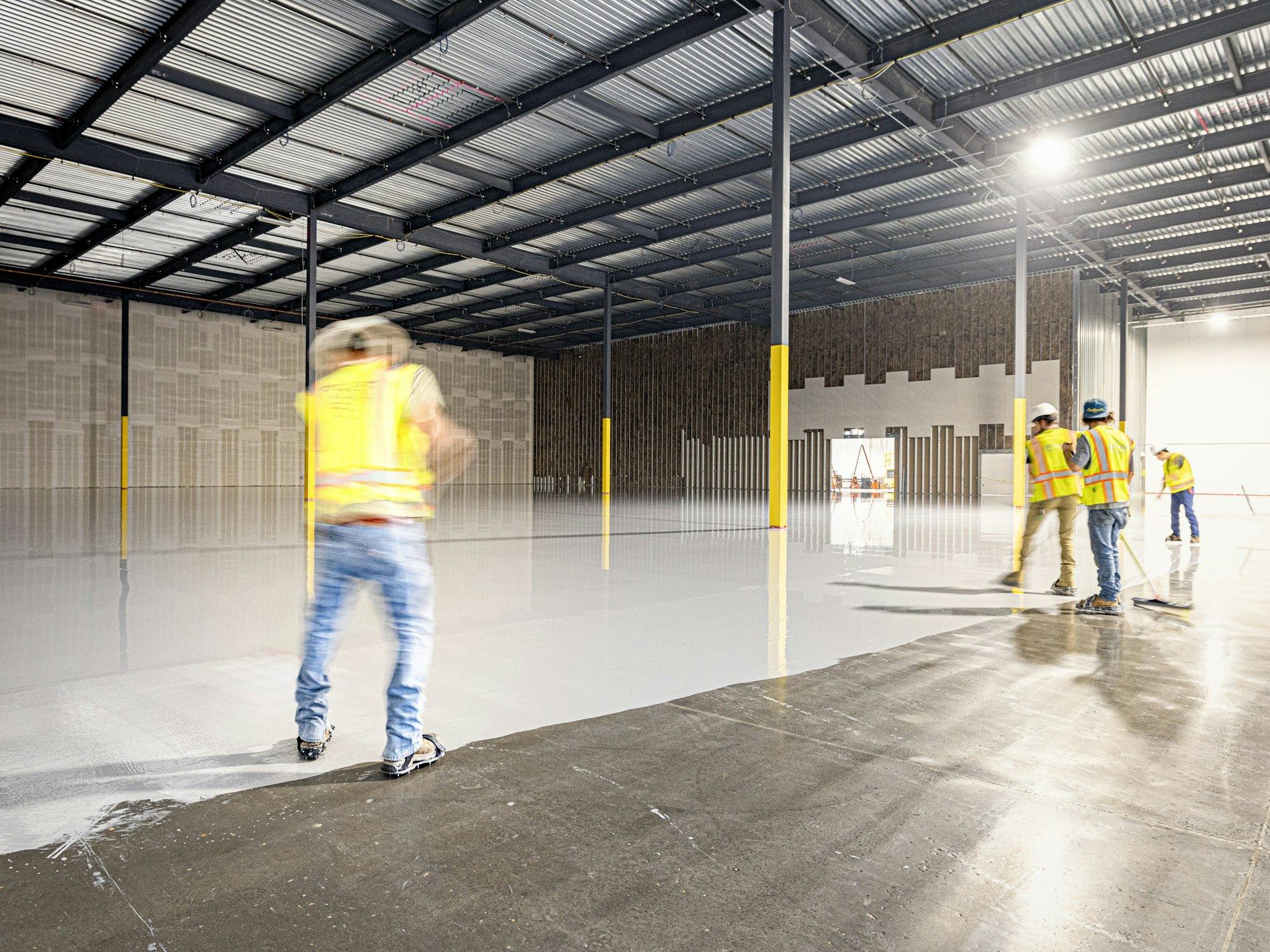
People often ask how long does resin flooring last before it needs attention again. The resin floor lifespan depends on thickness, traffic and how well the concrete underneath was prepared. In a busy Warrington warehouse where pallet trucks and forklifts run daily, a standard two-millimetre epoxy coating might need a fresh top layer after five to seven years. A heavier polyurethane screed laid at four millimetres or more can go much longer.
Garage floors see less punishment. A home garage in Lymm or Penketh with one car and light foot traffic can hold its finish for a decade or more without recoating. The difference comes down to point loads and abrasion. Forklift wheels turning on the same spot every day wear resin faster than tyres rolling straight in and out.
You can read more about choosing between thicknesses on the [resin floor thickness page](/before-the-pour/resin-floor-thickness-warrington). Specialist firms working across Warrington, Newton le Willows and Earlestown assess the traffic first, then specify a system built for that load rather than guessing.
What usually causes a resin floor to fail early?
Early failure almost always starts beneath the surface. Moisture rising through the slab pushes the coating off the concrete. If the floor was not ground open before the resin went down, the bond stays weak and chips appear within months. You can read more about moisture problems on the [damp concrete page](/before-the-pour/damp-concrete-and-resin).
Chemical spills left sitting also break down cheaper epoxies. Food factories around Great Sankey and Birchwood need specific chemical-resistant grades because citric acid, fats and cleaning agents attack standard coatings fast. Impact damage from dropped tools or heavy stock is another common cause in loading bays and workshops.
Poor preparation accounts for most complaints. Grinding the concrete to a clean, profiled surface takes time, so some contractors skip it. That shortcut shows up as bubbling, peeling or flaking soon after the job finishes. The [preparation guide](/before-the-pour/preparing-a-concrete-floor) explains what proper grinding looks like. When a floor fails early in a Warrington unit, the specialist firm will check the moisture readings and the prep marks before suggesting a fix.
Can a worn resin floor be refreshed?
A common question is whether you can recoat a resin floor or if the whole thing has to come up. Most of the time, a refresh is possible. If the base coat is still bonded to the concrete and only the top layer shows wear, a specialist firm will diamond grind the surface lightly and apply a new topcoat. This costs less and takes far less downtime than stripping back to bare slab.
Full removal becomes necessary when moisture has broken the bond across large areas or when the original coating was the wrong type for the traffic it receives. Patching over delaminated sections never holds for long. The [resin floor repairs page](/coatings/resin-floor-repairs-warrington) covers how localised damage gets cut out and filled.
Units in Burtonwood, Dallam and Norton often have older floors that were coated years ago with products no longer sold. In those cases the specialist tests adhesion first. If the old resin pulls away under a cross-hatch test, it comes off completely before anything new goes down.
Day-to-day cleaning without damaging the surface
Epoxy floor maintenance advice starts with keeping grit off the surface. Sand and small stones act like sandpaper under forklift wheels. A ride-on sweeper or a soft brush attachment on a scrubber dryer removes the grit without scratching. Avoid stiff bristles and metal scrapers.
For liquid spills, mop them up rather than letting them sit. Most resin floors handle water and mild detergents without trouble. Strong solvents, neat bleach or acidic cleaners can dull the gloss or soften the surface over time. Specialist firms usually leave a data sheet showing which cleaning chemicals are safe for the specific product they installed.
In food and drink factories around Warrington, hygiene rules demand frequent wash-downs. Polyurethane systems handle hot water and steam better than basic epoxy. For garages and retail spaces, a simple neutral pH cleaner and a microfibre mop keep the floor looking right. Never use a pressure washer close to the surface, as the jet can get under edges and lift the coating.
Colour fade under roof lights and windows
Standard epoxy resins yellow when exposed to ultraviolet light. In a Warrington warehouse with polycarbonate roof lights, the patches directly below them will turn a shade darker over the first year or two. The floor does not lose strength, but the colour shifts.
If appearance matters, such as in a showroom or retail space, a UV-stable polyurethane topcoat prevents this. Aliphatic polyurethanes do not amber the way aromatic epoxies do. Specialist firms specify these for areas near glazing or roller doors that stay open during the day.
The [resin floor colours guide](/blog/resin-floor-colours-light-floors-bays-and-walkways) explains which pigments hold up best. Light greys and creams show the yellowing sooner than dark greens or charcoal. In car park decks and outdoor ramps, UV stability is essential since the sun hits the surface all day. Indoor units with no natural light can safely use standard epoxy without worrying about fade.
Slip resistance and adding grip to wet floors
People often wonder if resin floors are slippery. A smooth, glossy epoxy is slippery when wet. Water, oil or condensation turns it into a hazard, especially near doorways and wash-down areas. But grip can be built in during installation.
Specialist firms broadcast fine aggregate into the wet resin to create texture. The size and amount of aggregate determine how rough the floor feels underfoot. A light scatter gives enough grip for a workshop or MOT bay without making the floor hard to sweep. A heavier broadcast suits loading docks, cold stores and food factory floors where water and fat are constant.
Anti-slip coatings are available as a separate service for existing floors that need more grip. The [anti-slip floor coating page](/coatings/anti-slip-floor-coating-warrington) covers the options for wet areas around Warrington. The trade-off is always between slip resistance and ease of cleaning: rougher floors hold dirt more readily, so the specification must balance safety against maintenance effort.
Timelines from first visit to walking on the floor
The schedule depends on the size of the area and the system chosen. After an initial site visit, a specialist firm typically allows a few days to prepare the quote and confirm the specification. Once booked, preparation and application for a standard industrial unit in Warrington take two to four days.
Day one involves diamond grinding the concrete, repairing cracks and vacuuming the dust. The primer goes down the same afternoon or the next morning. Body coats follow, then the topcoat. Each layer needs curing time before the next one is applied. Temperature matters: cold slabs slow the cure, so winter jobs in unheated units around Norton or Earlestown may take an extra day.
Foot traffic is usually allowed after twelve to twenty-four hours. Forklifts and heavy vehicles need longer, often forty-eight to seventy-two hours depending on the product. The [curing and downtime guide](/before-the-pour/how-long-before-we-can-use-the-floor) breaks down the waiting periods. Planning the work over a weekend minimises disruption for active warehouses.
Does resin flooring need a maintenance contract?
Resin floors do not require a formal maintenance contract to stay functional. They are not like boilers or lifts that need scheduled servicing to remain safe. But periodic checks help catch small problems before they spread.
Some businesses in Warrington arrange for a specialist firm to inspect the floor once a year, looking for chips near expansion joints, wear patterns under racking and any signs of moisture creep. These visits cost little compared to replacing a section that failed silently.
Line marking fades faster than the floor itself, especially in aisles where pallet trucks turn constantly. Refreshing bay lines every couple of years keeps the layout clear and meets health and safety expectations. The [floor line marking page](/coatings/floor-line-marking-warrington) covers repainting schedules. Beyond that, good daily cleaning and prompt repair of impact damage are all a resin floor asks for.
Signs your resin floor is wearing out
Wear shows up gradually. Catching it early means a simple recoat rather than a full strip and relayout. Look for these changes on the surface.
- 1
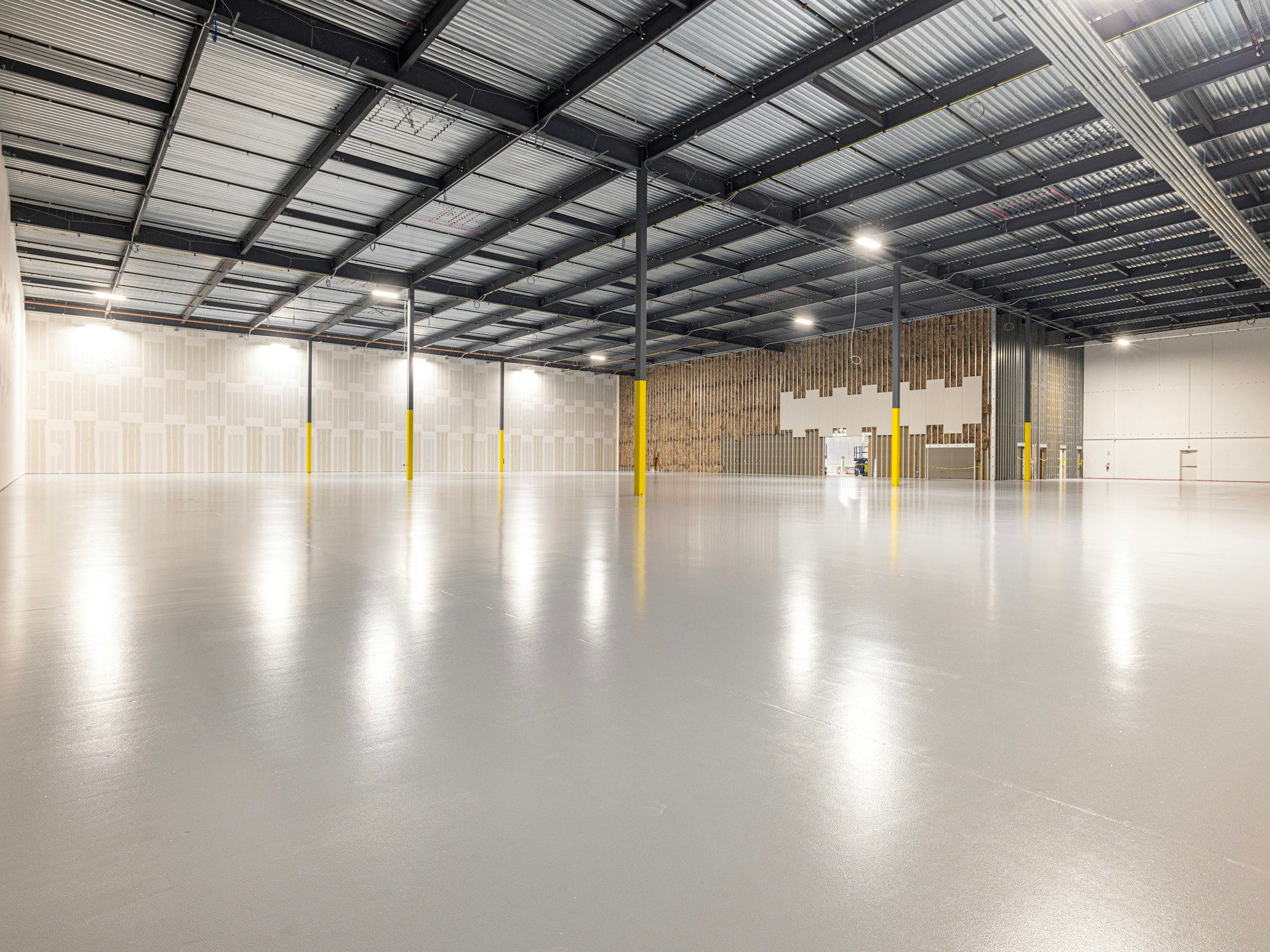
Dull patches in traffic lanes
Gloss disappears where wheels pass repeatedly. The resin thins but may still be bonded to the concrete underneath.
- 2
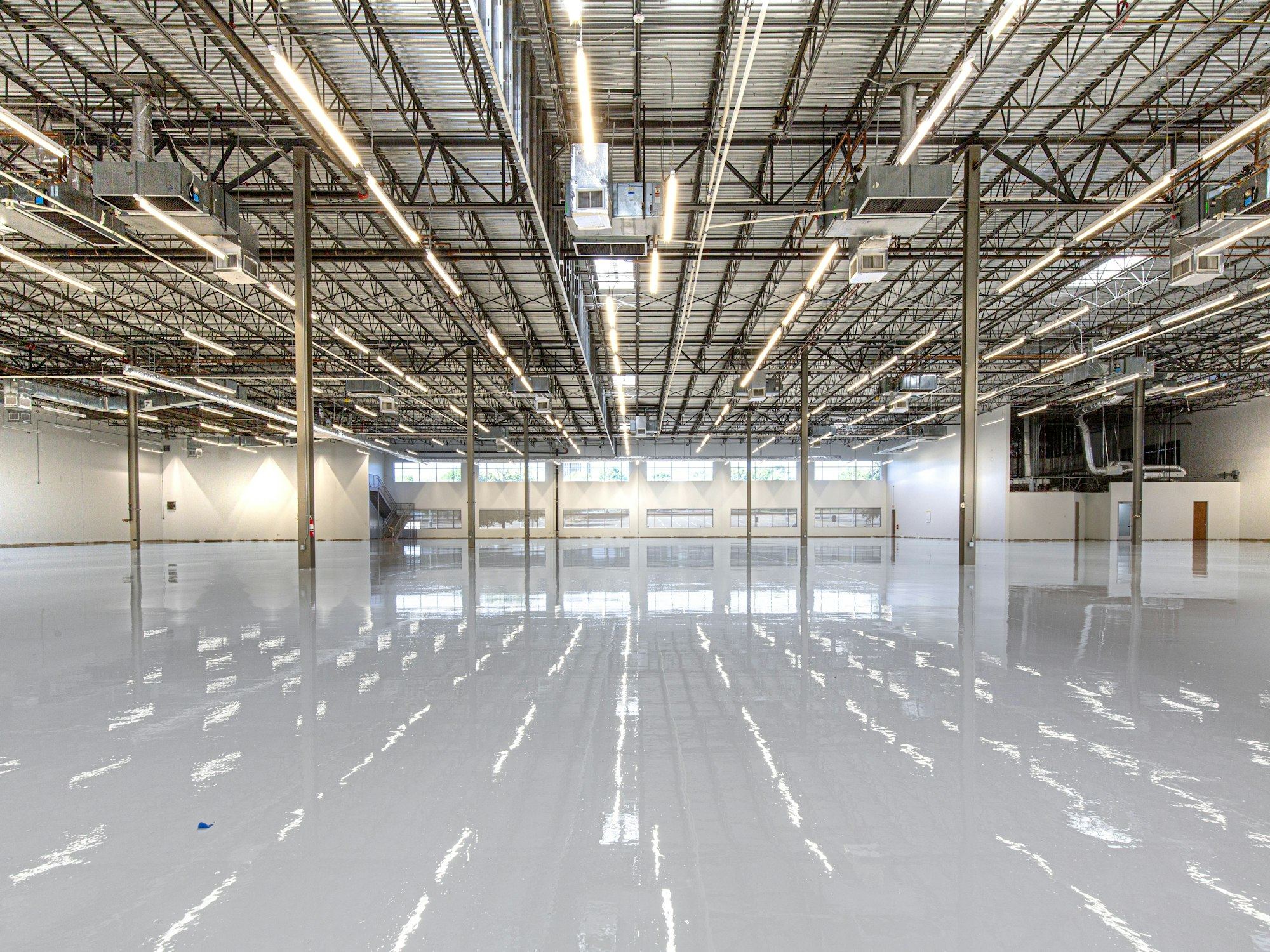
Edges lifting near joints
Coating peels away from saw cuts or door thresholds. Moisture often creeps in here first, breaking the adhesive bond.
- 3
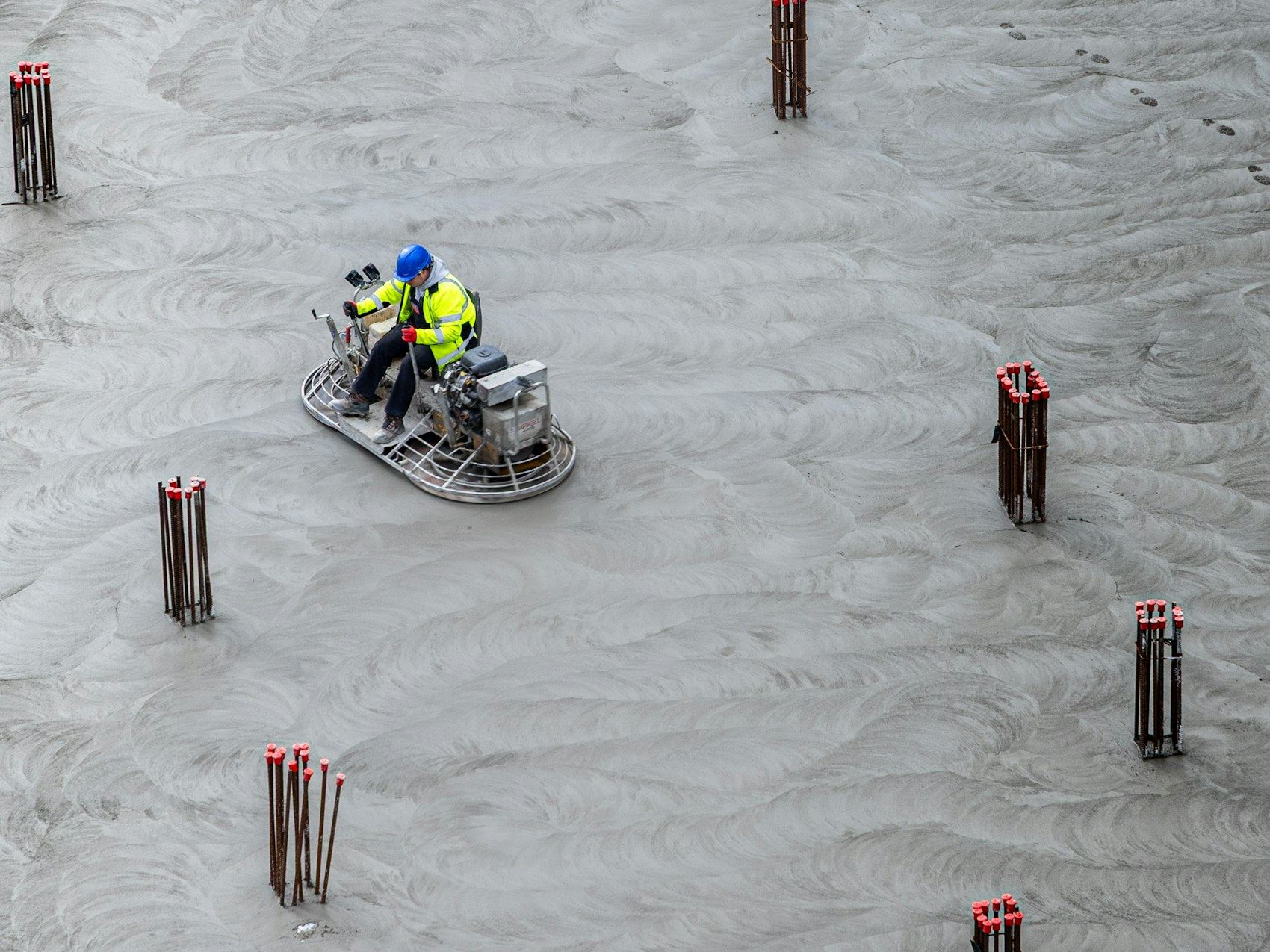
Fine cracks in the surface
Hairline fractures that mirror the concrete below. Movement in the slab transfers through thin coatings over time.
- 4
Chips around racking legs
Small craters where steel feet or dropped goods have punched through. Exposed concrete stains easily and absorbs spills.
- 5
Yellowing under roof lights
Colour shift caused by sunlight hitting standard epoxy. The surface remains solid but the appearance changes visibly.
Resin flooring questions answered
- Recoating versus full removal
- Most worn floors accept a new topcoat after light grinding. Full removal is only needed when the base layer has lost adhesion to the slab.
- Cleaning without damage
- Use a soft brush or microfibre mop with a neutral detergent. Avoid pressure washers, wire scrapers and strong solvents that soften the resin.
- Adding slip resistance later
- Aggregate can be scattered into a fresh topcoat applied over the existing floor. Specialist firms match the grit level to the traffic type.
- Curing time for vehicles
- Curing time depends on the product, thickness and temperature. A specialist will confirm when foot traffic can return and when forklifts are safe to drive back on. Find out more about [curing times and downtime](/before-the-pour/how-long-before-we-can-use-the-floor).
- Maintenance contracts
- No standing contract is required. An annual visual check and timely line-marking refresh keep most Warrington unit floors in shape.
Ask about your floor in Warrington
Send the details of your space and a specialist firm will respond with their recommendation. There is no fee for the enquiry and no commitment to proceed.
- No charge to ask
- No obligation to book
- Local specialists reply