Warrington concrete floors
Can you epoxy damp concrete floors?
Send the details of your slab and a specialist firm will tell you whether it can take a coating or needs a membrane first. There is no charge for the advice.
Why people ask if you can epoxy damp concrete
A lot of unit owners across Warrington notice their floor looks wet before they think about a coating, so they ask if you can epoxy damp concrete. The short answer is that standard resin systems need a dry surface to bond. Moisture sitting inside a slab pushes upward as vapour, and when it meets an impermeable epoxy layer it creates pressure. That pressure lifts the coating off the concrete.
Older industrial buildings around Warrington rarely had a barrier laid under the original pour. Ground moisture moves freely through the capillaries in the concrete. A specialist firm will always run a concrete moisture test before epoxy goes down, because guessing leads to expensive failures. If the readings are too high, a different approach is needed. That might mean a moisture tolerant floor primer or a full surface membrane applied before the topcoat. Either way, the decision comes from numbers rather than assumptions.
How relative humidity floor testing works
The question of how to test if an old slab is too damp to coat comes down to measuring what sits inside the concrete, not just what shows on the surface. Relative humidity floor testing involves drilling small holes into the slab and placing sealed probes at a set depth. Those probes measure the moisture condition where the resin will actually sit.
People often want to know what a hygrometer test is and how long it takes. The specialist drills the holes, inserts the sleeves and seals them. The probes then need time to reach equilibrium with the concrete, which usually takes seventy two hours. After that period the specialist reads the percentage. Most manufacturers set a limit around seventy five percent relative humidity for standard epoxy. Anything above that means the slab is too wet for a normal system. The reading tells the specialist exactly which products will hold and which will fail.
Units built without a damp proof membrane
Many older warehouses and workshops in Warrington were poured straight onto hardcore with no plastic sheet beneath. If your unit has no damp proof membrane, you can still have resin, but the specification changes completely. A standard epoxy will blister within months because ground water keeps migrating through the slab.
The fix is a damp proof membrane resin floor system. The specialist applies a liquid membrane directly to the prepared concrete. This layer blocks rising damp warehouse floor problems by stopping vapour transmission at the surface. Once cured, the membrane acts as the barrier the building never had. The resin topcoat then goes over it. It costs more than a straightforward coating because there is an extra material layer and additional labour involved. The exact difference depends on the floor area and the product chosen. Leaving out the membrane to save money guarantees a callback when the bubbles appear.
Dark patches and corners that stay wet
A floor that always looks dark in one corner is telling you something about water movement. Dark concrete means moisture is present near the surface. Coating over it without investigation risks trapping that water under a film of resin. The trapped moisture has nowhere to go, so it pushes the coating up until it separates from the slab.
A specialist will treat that dark area as a warning sign. They may drill a test hole right in the patch and another in a dry area to compare readings. Sometimes the cause is a leaking pipe or poor drainage outside the building rather than general rising damp. Other times it is simply where the slab is thinnest or closest to the water table. Whatever the reason, the specialist needs to understand it before choosing a primer or a membrane. Applying resin blindly over a persistently wet patch wastes material and leaves you with a repair job weeks later.
Waiting after a new pour and dealing with failure
Epoxy on new concrete waiting time matters because fresh slabs contain enormous amounts of water from the mixing process. Most specialists require a minimum of twenty eight days curing, and even then the slab must be tested. A new pour might look dry on the surface while holding significant moisture deeper down. Rushing the coating schedule is one of the most common reasons floors fail early.
If the test fails on the day the specialist arrives to start work, they will not proceed with the planned system. Going ahead would mean the resin fails quickly on damp concrete, lifting in sheets or bubbling across the whole bay. Instead, the specialist will explain what the readings mean and propose an alternative. That could involve extending the drying time with dehumidifiers, switching to a moisture tolerant product, or installing a surface membrane. None of these outcomes waste your money. They prevent you from paying twice for the same floor.
Signs your concrete slab holds too much moisture
Moisture inside a concrete slab does not always pool on the surface. It shows itself in slower ways that are easy to miss until a coating starts to lift or bubble.
- 1
Dark patches on the surface
Areas that stay darker than the surrounding concrete often hold more moisture. This can mean water is moving up through the slab.
- 2
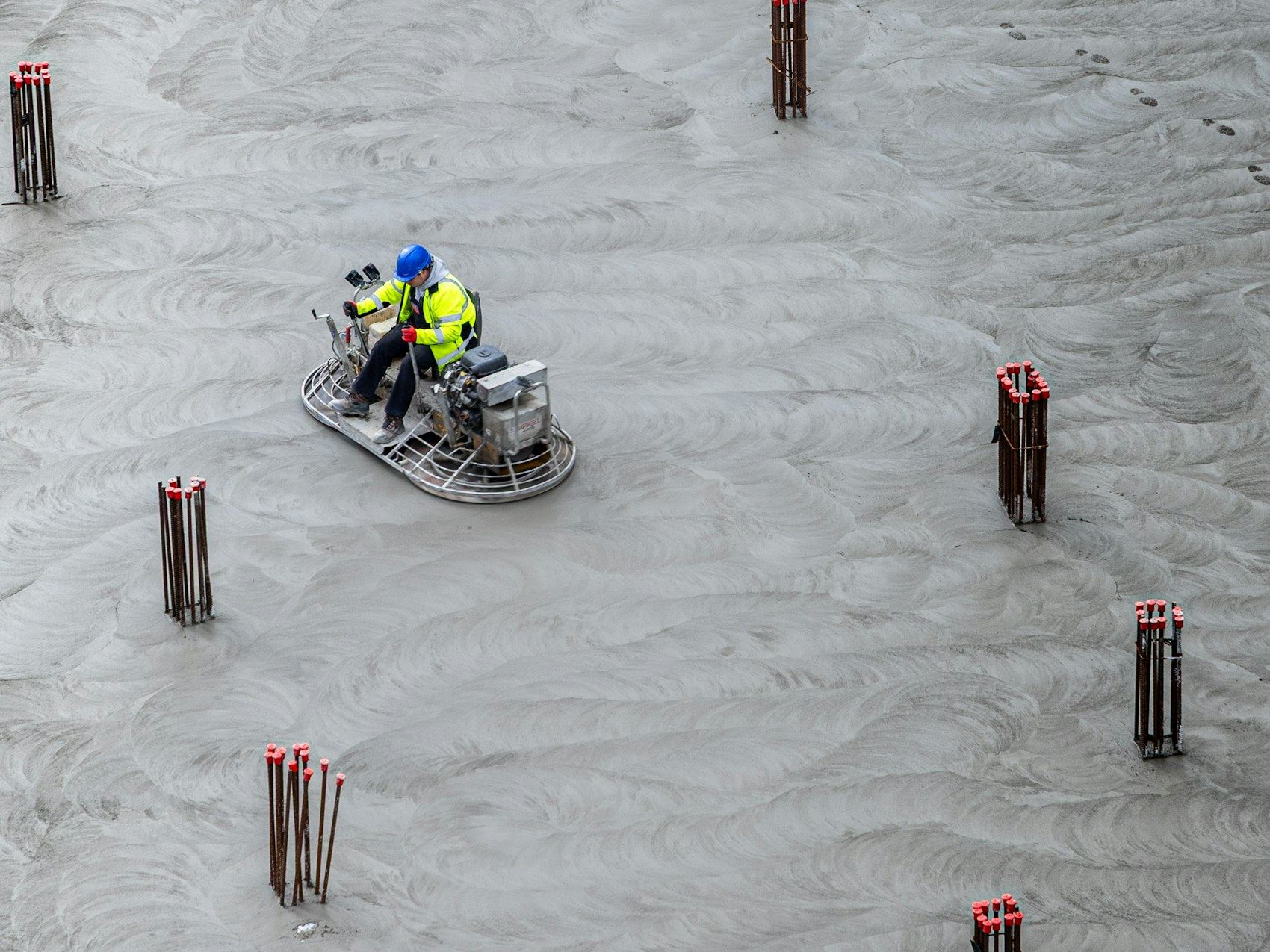
White powdery deposits
A chalky white residue left behind when water evaporates carries salts from inside the concrete. It suggests ongoing moisture movement.
- 3
Peeling paint or old coatings
Previous finishes that blister or peel away indicate vapour pressure pushing up from below. New resin may do the same.

- 4
Damp smell in the unit
A persistent earthy or musty smell, especially near walls or corners, often points to moisture trapped in or under the floor.
Damp concrete questions Warrington
-
Answers to the things unit owners in Warrington ask before booking a floor coating.
- Testing an old slab
- The specialist drills holes, sets sealed probes and reads the relative humidity after about seventy two hours.
- No membrane in the unit
- A liquid damp proof membrane resin floor system can be applied over the bare concrete before the topcoat goes down.
- Extra cost for damp systems
- A moisture tolerant floor primer or membrane adds material and labour. The specialist prices this after testing.
- Coating dark wet corners
- The specialist tests the dark area separately. Persistent moisture means a standard epoxy will likely lift there.
- Resin failing on damp concrete
- Yes. Vapour pressure builds under the coating and forces it off the slab, causing blisters or total delamination.
- Waiting after a new pour
- Most specialists wait at least twenty eight days, then test. Epoxy on new concrete waiting time protects the investment.
Find out what your slab needs
Describe the floor and any damp patches you have noticed. A specialist firm will review the details and advise on testing or membrane options. Sending an enquiry does not commit you to any work.
- No obligation
- Free initial advice
- Local to Warrington