Warrington floors
Why is my epoxy floor flaking and peeling?
Describe what you see on your concrete slab. A specialist firm in Warrington will read the details and tell you whether the coating can be saved or needs replacing, with no charge for the advice.
The usual reasons an epoxy coating lets go
If you are asking why is my epoxy floor flaking, the answer almost always starts at the concrete surface beneath it. Epoxy bonds mechanically to the pores of a slab. When those pores are blocked by dust, oil, old paint or curing compounds, the resin sits on top rather than locking in. Foot traffic or forklift wheels then break that weak bond and the coating lifts.
Moisture is the other main cause. Ground floors across Warrington sit on slabs that wick water upward if no damp proof membrane was laid, or if the membrane has failed. That vapour pressure pushes against the underside of the film until it blisters and separates. The epoxy floor peeling causes usually come down to one of these two problems: contamination or damp.
A fourth factor is thickness. A coat applied too thinly cannot bridge small imperfections in the concrete and wears through fast. In warehouses where pallet trucks run daily, a thin film fails within months. Understanding which of these factors applies to your floor determines whether a patch repair holds or the whole surface needs stripping back.
What a specialist checks before deciding on a fix
Before anyone talks about resin floor delamination repair, they need to know what the slab is doing. A specialist firm will test the moisture content of the concrete, usually with a hygrometer sealed under a plastic mat for seventy-two hours, or with an electronic moisture metre pressed to the surface. They will also check for laitance, a weak dusty layer left behind when the original concrete was poured and trowelled.
They look at how the existing coating comes away. If it lifts cleanly, leaving bare grey concrete underneath, the preparation was poor. If chunks of concrete come up stuck to the back of the epoxy, the bond was stronger than the slab itself, which points to a weak substrate or freeze damage.
In food factories or workshops around Warrington, they also check for chemical attack. Spilled solvents, oils or cleaning acids soften certain resins over time. Identifying the exact failure mechanism matters because recoating old epoxy floor surfaces without fixing the root cause simply repeats the problem.
Patching a section versus stripping the whole slab
Small failures in a corner or along a joint line can sometimes be cut out and filled. A specialist cuts back to sound coating, grinds the edges to a feathered profile, dries the exposed concrete and applies fresh resin. This works when the surrounding floor is firmly bonded and dry.
When floor paint lifting warehouse wide occurs, patching rarely lasts. The rest of the coating is already compromised even if it looks flat. Forklift traffic will find the boundary between old and new material and start prising it up again. In those cases the firm will recommend failed floor coating removal across the full area.
For a home garage, the calculus is different. A garage epoxy bubbling fix might only involve grinding out the blistered patches near the door threshold where rain drips in, provided the rest of the slab tests dry. The decision always follows the testing, never the appearance alone.
Removing the old coating properly
Stripping epoxy from concrete requires heavy equipment. A specialist uses a ride-on diamond grinder or a shot blaster to chew through the resin and open the pores of the slab below. Hand grinders leave ridges that telegraph through the new coat.
Dust control matters indoors. Industrial vacuums bolted to the grinder capture silica dust before it settles on racking or machinery. In occupied units around Warrington, the work often happens over a weekend so the space is clear.
Once the resin is gone, the firm inspects the concrete for cracks, spalling or hollow spots. Any structural damage must be repaired before new primer goes down. Skipping this step means the fresh coating will crack exactly where the old one did. Proper removal is the foundation of any lasting result.
Cost and downtime for a strip-out and recoat
Removing and relaying costs more than a localised repair because it involves heavy plant, disposal of the old material and several days of labour. The price per square metre depends on the thickness of the new system and the condition of the slab once it is exposed. A firm working in Warrington will price the job after seeing the floor in person, not from photographs alone.
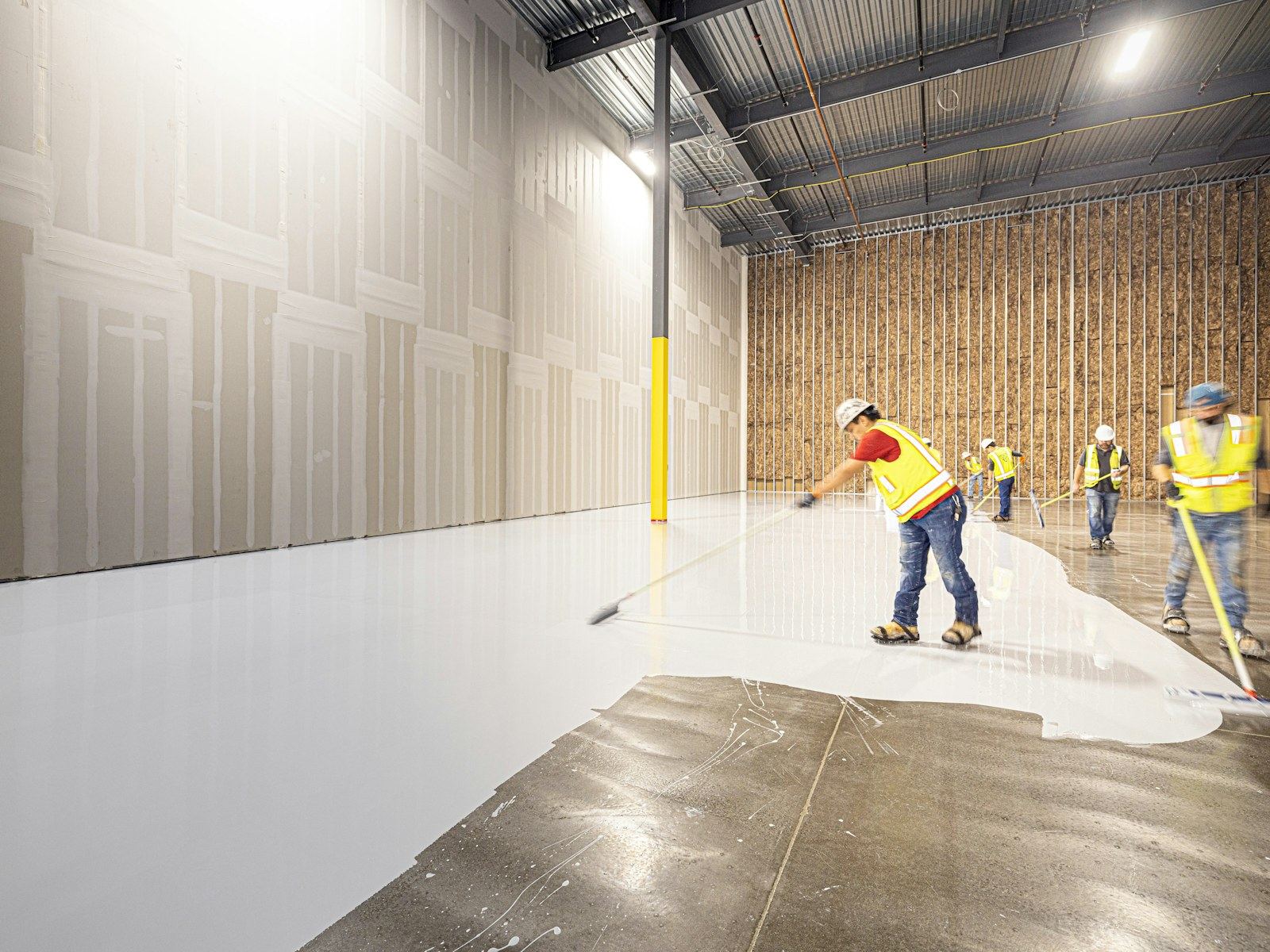
Downtime depends on the size of the area and the cure time of the chosen resin. Standard epoxies need twenty-four hours before light foot traffic and up to seven days before heavy loads. Fast-cure polyaspartic systems can be walked on in a few hours, which suits busy distribution units that cannot afford a week off.
Whether you can claim against the firm that laid the original floor depends on your contract and whether they followed the manufacturer's preparation guidelines. A new specialist can document the failure, but legal advice falls outside their scope.
Preventing the same failure next time
A new coating will fail in the same way if the underlying problem remains. If moisture caused the lift, the firm may specify a damp proof membrane primer or a breathable polyurethane system instead of standard epoxy. If contamination was the issue, they will grind deeper and solvent-wipe before priming.
Preparation should have involved mechanical abrasion of the entire slab, vacuum extraction of all dust, and a moisture reading below the resin manufacturer's limit. Any joints or cracks should have been routed out and filled with a flexible compound before the base coat went down.
Choosing the right thickness matters too. A 2mm self-levelling system handles foot traffic and light trolleys. A 4mm or 6mm heavy-duty screed withstands steel-wheeled trucks and point loads. Matching the specification to the actual use of the floor is the final safeguard against early failure.
Signs your epoxy floor is letting go
Epoxy detaches from concrete gradually. You might notice a change in texture or sound before large pieces start coming up. These are the things to look for on your floor.
- 1
Blisters and bubbles
Raised domes in the coating, often grouped together. They suggest trapped moisture pushing up from below the resin film.

- 2
Edges curling upward
The border of the coating lifts like a sticker peeling off. Traffic catches the raised lip and tears it further back.
- 3
Hollow sound underfoot
Tapping the floor produces a drum-like noise instead of a solid thud. The resin has lost contact with the concrete.
- 4
Flakes in sweepings
Small chips of coloured resin gather near doors or under racks, even though nothing heavy has dropped on the surface.
- 5
White powder under the chip
Lifting a loose piece reveals chalky dust on the concrete. The slab was likely not ground or cleaned before coating.
Questions about flaking epoxy floors in Warrington
If you are searching why is my epoxy floor flaking across your Warrington home or unit, a specialist can inspect the concrete beneath the coating to find out whether moisture, poor preparation or contamination caused it.
- Peeling away in sheets
- Large sheets lifting usually mean the primer never bonded to the slab, often because of dust, oil or moisture blocking adhesion.
- Patch repair or full removal
- A specialist tests the remaining bond. If most of the floor sounds hollow, stripping it all is cheaper than repeated patches.
- Moisture or poor prep
- Hygrometer readings and inspecting the underside of lifted chips reveal whether water vapour or surface dust caused the failure.
- Removal cost versus repair
- Full strip-out costs more upfront but avoids paying twice. A site visit in Warrington gives an accurate figure.
- Claiming against the installer
- A new firm can document the cause. Whether you can recover costs depends on your original contract and warranty terms.
- Downtime for a recoat
- Standard epoxy needs several days to cure. Fast-cure systems allow foot traffic in hours, reducing closure time for busy units.
Tell us what your floor is doing
Send a description of the flaking and the type of building. A specialist firm covering Warrington will review it and advise whether the coating can be saved or needs replacing. There is no fee for this initial assessment.
- No obligation
- What the specialist checks
- Local specialists