Warrington workshops
Workshop floor coating in Warrington
Send the dimensions and condition of your workshop floor to receive a price from a specialist firm. There is no charge for the enquiry and no obligation to book any work.
Oil, brake fluid and the right resin system
Garages, bodyshops and MOT bays face oil, brake fluid and tyre marking every day. A standard garage workshop floor epoxy in Warrington will soften and peel if those fluids sit on it long enough. The specialist firm you deal with will choose an oil resistant floor coating formulated to resist hydrocarbons, so the surface stays intact under vehicles that leak.
Which coating stands up to oil and brake fluid in a busy MOT bay? Typically a high-build epoxy or a polyurethane system, depending on how much chemical contact the floor sees. A two-pack resin applied at the correct thickness handles constant spillage far better than single-pack mot bay floor paint bought from a hardware shelf. The specialist will assess traffic levels and fluid types before recommending a specific product.
Bodyshop floors need something different from a general repair workshop. Paint overspray, thinners and sanding dust demand a smooth, non-porous bodyshop floor resin finish that wipes clean without trapping contaminants. A general repair bay might prioritise impact resistance over gloss. Both environments benefit from a workshop floor coating Warrington firms trust, but the exact specification changes based on what happens above the slab.
Working around ramps, pits and old concrete
Can you coat around the ramp legs and the inspection pit? Yes. The specialist firm grinds and prepares the concrete right up to fixed steelwork and applies the resin to vertical faces inside the pit as well as the horizontal deck. An inspection pit floor coating needs the same chemical resistance as the main bay because brake fluid and engine oil drain straight down into it.
Our old concrete is soaked in oil, can it be coated at all? Often yes, but the preparation changes. The specialist will use degreasers, mechanical grinding or poultice treatments to draw out contamination before any resin goes down. If the oil has penetrated too deeply, a moisture-tolerant primer or a new screed layer may be necessary. Skipping this step guarantees failure later.
The existing slab condition dictates the whole approach. Pitted concrete may need repairs before the coating starts. Expansion joints must be respected rather than bridged, since filling them solid causes the resin to crack when the building moves. The specialist surveys the floor first and builds the preparation method around what they find, not around a standard template.
Downtime, curing and getting back to work
How long must the workshop be closed while the floor is done? For a typical two-bay garage, expect the space to be out of action for three to five days. That covers preparation, application and curing. Temperature matters: cold Warrington winters slow the chemical reaction, so the specialist may use heaters or specify a faster-curing winter resin to keep the schedule tight.
Vehicles cannot return until the coating has reached full hardness. Driving on it too early leaves permanent tyre marks and compresses the surface before it bonds properly. The specialist will give a clear timeline for foot traffic, light vehicles and heavy axle loads. Staging the work bay by bay is sometimes possible, letting part of the workshop stay open while the other half cures.
Ventilation during application is another factor. Solvent-based systems produce fumes that need extraction, especially in enclosed MOT bays. Water-based alternatives reduce this problem but may trade off some chemical resistance. The specialist balances these variables against your deadline and tells you exactly when the bay can take its next booking.
Slip resistance where floors stay wet
Will the floor still be slip resistant when it is wet or oily? A smooth resin surface becomes dangerous the moment water or oil hits it. The specialist adds graded aggregate to the wet resin or broadcasts quartz sand into the topcoat to create texture. This gives boots and tyres grip even when the floor is covered in coolant or rainwater tracked in from the yard.
The level of grit depends on the work. A bodyshop needs a smoother finish for easy cleaning; an MOT bay with frequent oil spills needs a heavier profile. Too much texture traps dirt and makes sweeping difficult. Too little leaves technicians sliding. The specialist discusses this trade-off before pouring anything, often laying a small sample area so you can feel the difference underfoot.
Anti-slip additives wear down in high-traffic lanes over time. Wheel tracks directly under vehicle lifts see more abrasion than the edges of the bay. Planning for eventual maintenance means choosing a system the specialist can re-coat locally without redoing the entire floor.
Bay markings and layout lines
Can you line out the MOT bay to the required markings? Yes. Vehicle workshop floor marking uses durable two-part line paint or pre-formed thermoplastic tape applied after the main coating has cured. The specialist lays out pedestrian walkways, bay boundaries, hazard zones and directional arrows according to DVSA requirements or your own operational plan.
Line colour matters. Yellow typically marks hazards and restricted areas, while white defines bays and walkways. The specialist uses stencils or masking to keep edges sharp. Because the lines sit on top of the sealed resin, they bond well and resist tyre scrubbing far longer than paint applied directly to bare concrete.
If your layout changes later, the old lines can be ground out and repainted. Planning the marking stage alongside the coating work saves time. The specialist coordinates both tasks so the workshop opens with a finished, clearly zoned floor ready for its first inspection.
Pricing a two-bay workshop floor
What does it cost to coat a two bay garage floor and when could you start? Price depends on the condition of the existing concrete, the resin system chosen and the amount of preparation required. A straightforward application over sound, clean concrete costs less than one requiring extensive degreasing, crack repair and levelling. The specialist prices per square metre once they have seen the floor or reviewed detailed photographs.
When work can begin depends on the specialist firm's current schedule and the weather. Indoor workshops are less affected by rain, but ambient temperature still influences curing times and material choice. Most specialists in Warrington book a few weeks ahead, so sending an enquiry early gives you more options for timing the closure around your existing appointments.
Getting a clear figure means providing accurate measurements and describing any known problems like oil staining, damp patches or crumbling edges. The specialist uses that information to recommend the right thickness and system, then provides a written quotation covering preparation, materials, application and line marking if needed.
Signs your workshop floor needs attention
Bare concrete in a working garage absorbs everything dropped on it. Over time, the surface degrades, fluids seep deeper and the floor becomes harder to keep safe and clean.
- 1
Dark oil stains
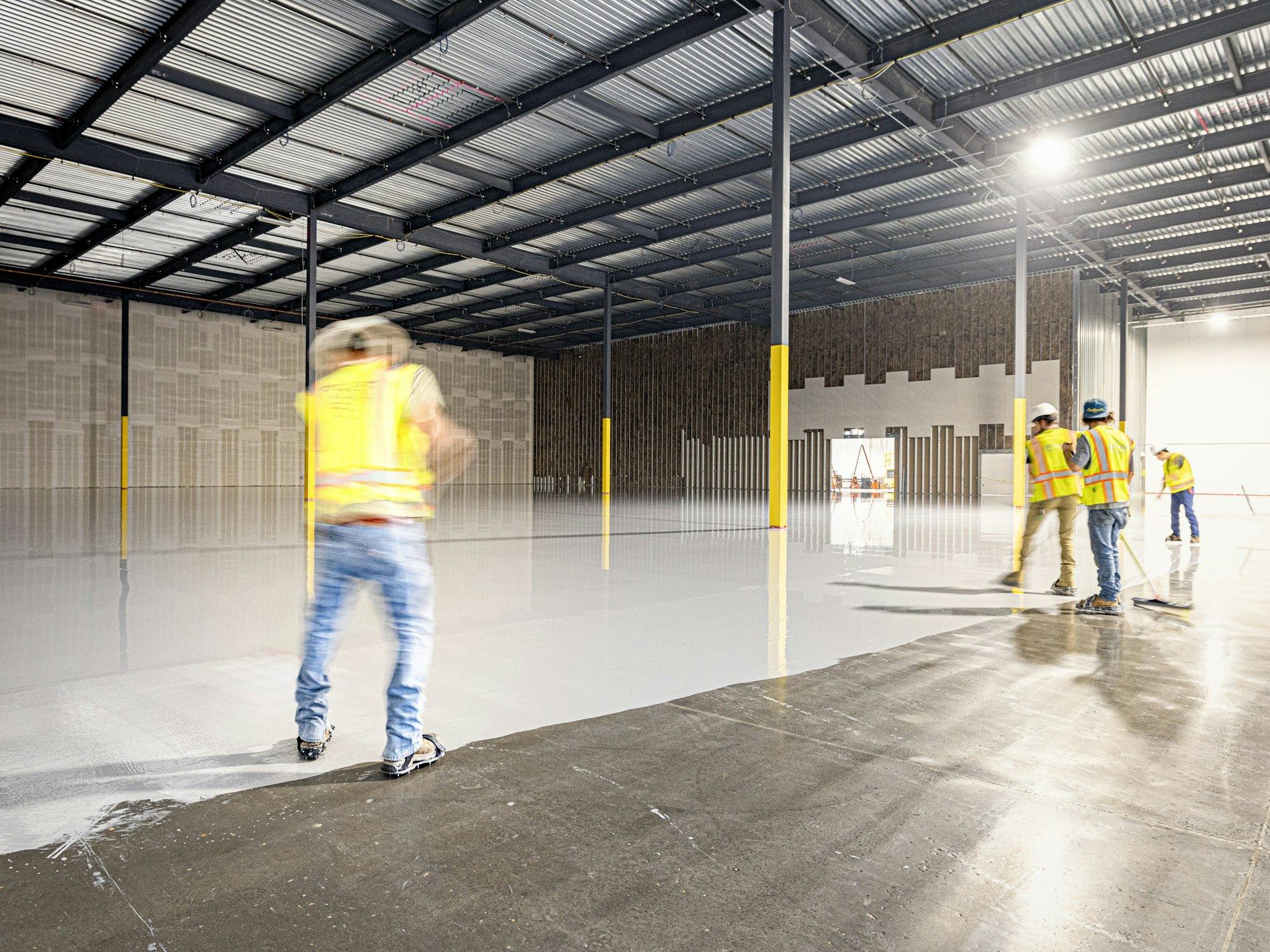
Spots that darken when wet and never fully dry out suggest oil has soaked below the surface, weakening the concrete and making adhesion difficult.
- 2
Dusting and loose grit
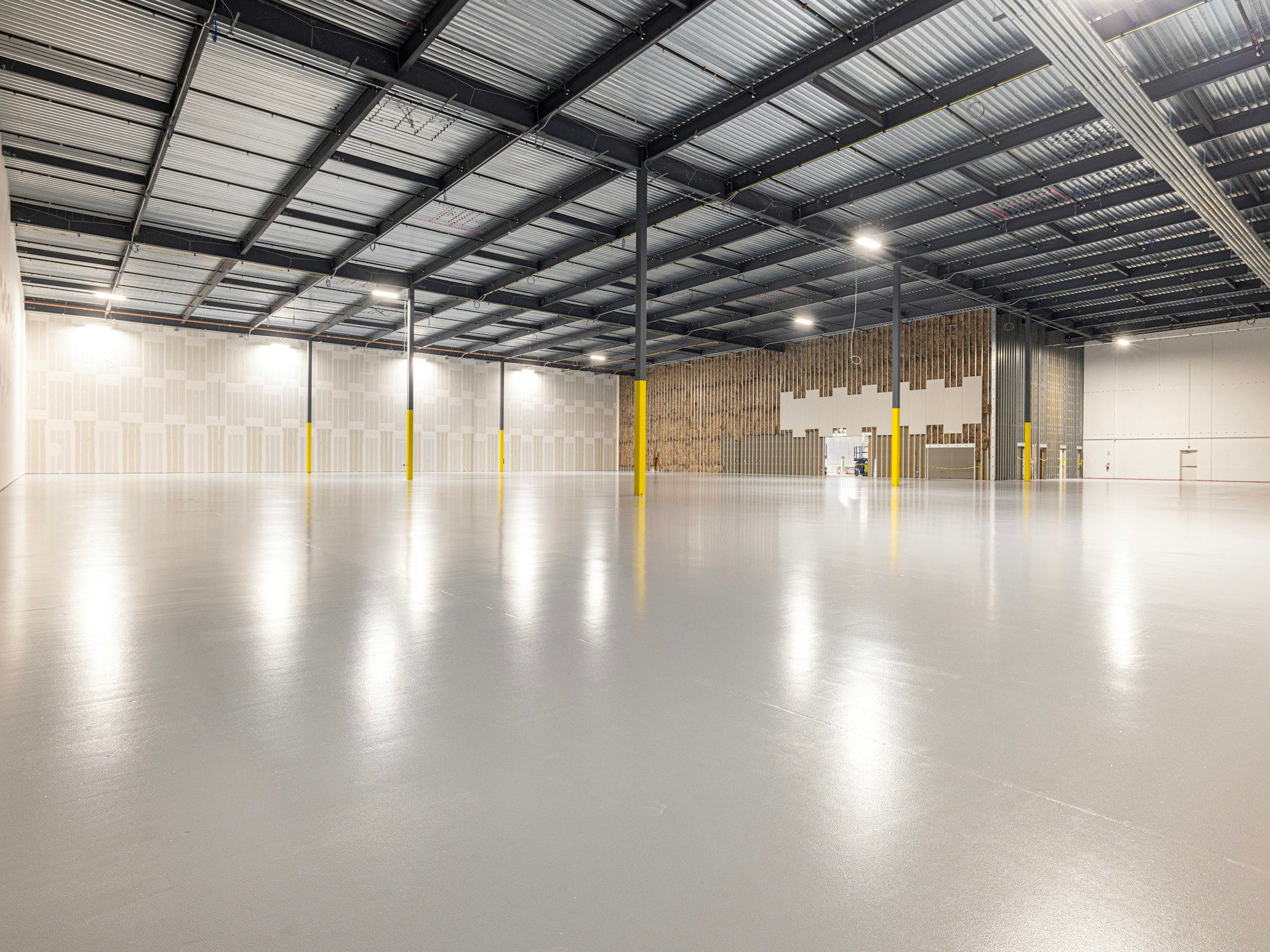
A chalky residue on boots and tools means the top layer of concrete is breaking down under traffic and needs sealing or resurfacing.
- 3
Faded or missing bay lines
Worn markings make it hard to position vehicles safely and can cause problems during inspections if the layout is unclear.
- 4
Cracks near ramp bases
Fissures radiating from fixed steelwork indicate stress points where movement or heavy loads have fractured the slab over time.

Coatings for Warrington workshops
Each service addresses a different workshop problem. The specialist firm recommends the right one after seeing the floor.
Get a price for your workshop floor
Send the size and condition of your floor. A specialist firm reviews the details and replies with a quotation. You are free to decline it or ask questions first.
- No obligation
- Free to enquire
- Local specialists