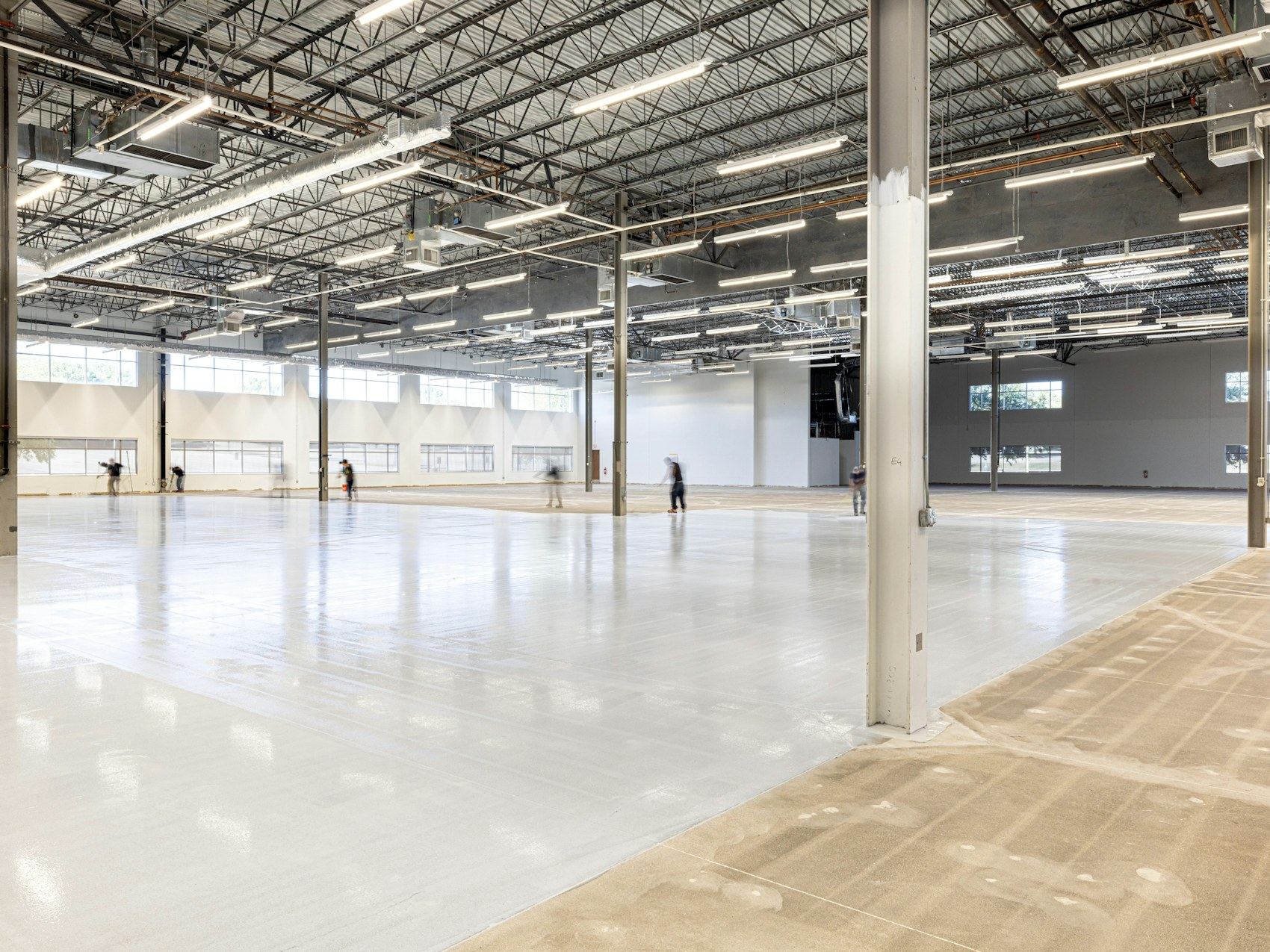
Warrington loading bays
Loading bay floor coating: docks, ramps and thresholds
Describe the damage you see on your loading bay floor. A specialist firm will read it and reply with what needs doing. Sending an enquiry costs nothing and carries no obligation to proceed.
Why loading bay floors take more punishment
A loading bay floor takes a different kind of abuse from almost any other concrete surface in a building. Pallet trucks drag steel wheels across it all day. Lorry tyres spin on the same few metres every time a vehicle reverses in. Forklifts drop heavy loads that chip the surface.
Bare concrete handles this for a while, then it starts to dust, crack and crumble at the edges. Once the top layer goes, water gets in. Freeze-thaw cycles in winter make the damage spread fast. A resin coating seals the surface against that cycle and gives the concrete something hard to bear the weight instead.
The specialist firms who do this work around Warrington use epoxy or polyurethane systems chosen for impact resistance rather than appearance. They assess how much traffic the bay takes, whether chemicals spill there, and how cold it gets before specifying a product. You can find out more about the options on the <a href="/coatings/epoxy-resin-flooring-warrington">epoxy resin flooring page</a>.
Dock levellers and the threshold problem
The joint where the dock leveller meets the yard is the weakest point on most loading bays. Steel plates flex. Concrete underneath cracks because the two materials move at different rates. Lorries hit the edge when they reverse, and the impact travels straight down into the slab.
A coating alone does not fix a broken threshold. The specialist will usually grind back the damaged concrete, fill voids with a repair mortar, and then apply a resin system over the whole area so there is no seam for water to exploit. This approach stops the edge breaking away again after the next delivery.
If the threshold has already started to fail, patch repairs are possible. Read about how <a href="/coatings/resin-floor-repairs-warrington">resin floor repairs</a> handle cracks and spalled areas. Getting the preparation right matters more than the coating itself, because a resin laid over loose concrete will lift within weeks.
Ramps need grip, not just hardness
A flat dock floor needs to resist abrasion. A ramp needs to do that and keep vehicles from sliding. In wet weather, a smooth resin surface on a gradient becomes dangerous for both forklifts and pedestrians.
Specialist applicators broadcast aggregate into the wet resin to create texture. The size and density of the grit determines how much grip the finished floor provides. Too fine and it wears smooth under tyre friction. Too coarse and pallet trucks rattle over it, shaking loads loose.
The same principle applies to <a href="/coatings/anti-slip-floor-coating-warrington">anti slip floor coatings</a> used elsewhere in industrial units. On a loading bay ramp, the wear rate is higher, so the aggregate layer often needs to be thicker or applied in two passes. The specialist will calculate the gradient and expected traffic to decide the specification.
Screeding before the coating goes down
Many loading bays in older Warrington units were poured without enough thought given to falls. Water pools near the dock doors instead of draining away. A resin coating laid over standing water will blister and peel.
Before any coating goes down, the specialist checks levels. Where the slab is uneven or slopes the wrong way, a new screed is applied to correct the fall. <a href="/coatings/concrete-floor-screeding-warrington">Concrete floor screeding</a> builds up low spots and creates a path for water to reach drains.
This step adds time to the project but prevents early failure. A coating is only as stable as the surface beneath it. If the substrate moves, holds moisture or has hollow patches, the resin above it will follow. Preparation accounts for most of the labour on a loading bay job, even though the coating is what you see at the end.
Line marking inside the bay area
Once the resin has cured, the bay still needs organising. Drivers need to know where to stop. Pedestrians need a safe route that keeps them away from reversing lorries. Pallet staging areas need clear boundaries so goods do not block the dock doors.
<a href="/coatings/floor-line-marking-warrington">Floor line marking</a> uses the same resin chemistry as the main coating, so the lines bond chemically rather than sitting on top like tape or paint. Yellow is standard for hazard zones and pedestrian routes. White marks storage bays. Red often indicates fire equipment or restricted areas.
The specialist plans the layout with the site manager before applying anything. Lines painted in the wrong place cause confusion and have to be ground off, which damages the fresh coating underneath. Getting the layout right first saves rework later.
Downtime and curing on a working dock
A loading bay rarely sits empty for long. Shutting it down for days costs money in delayed deliveries and rerouted vehicles. So curing time matters as much as durability.
Standard epoxy systems need several days to reach full hardness. Faster-curing alternatives exist, some ready for light foot traffic within hours, but they cost more and require precise mixing. The specialist balances the budget against how quickly the bay needs to reopen.
Temperature affects everything. A cold January pour cures slower than one in July. The specialist measures the slab temperature, not just the air, before starting. Details on <a href="/before-the-pour/how-long-before-we-can-use-the-floor">how long before you can use the floor</a> explain the variables involved. Planning the work over a weekend or during a quiet period reduces disruption, but the resin must still have enough time to cure properly before a loaded forklift crosses it.
Tell us about your loading bay floor
Send details of the wear you see and the dimensions of the bay. A specialist firm will review what you describe and reply with advice. There is no charge for the enquiry and no commitment to book work.
- No obligation to proceed
- Free to send an enquiry
- Local specialists respond