Warrington units
Resin floor colours: light floors, bays and walkways
Describe the space you need coated and the colour layout you have in mind. A specialist firm will reply with advice on what works for your unit, at no cost and with no obligation to proceed.
Why light floors matter in dark industrial units
A windowless warehouse bay or a deep workshop corner absorbs light. Painting that concrete a pale grey or off-white resin changes how the whole space feels. Forklift drivers see pallet edges sooner. Pickers read labels without leaning in. The ceiling lights reach further because the floor reflects them back up instead of swallowing the beam.
Lighter epoxy coatings also make dirt obvious. That sounds like a drawback until you realise it means spills get mopped before they stain and grit gets swept before it grinds into the surface. A clean floor lasts longer because abrasive particles are removed rather than walked over all day.
Specialist flooring firms often recommend a mid-grey rather than pure white for heavy traffic areas. Pure white shows every tyre mark from the first hour. Mid-grey still lifts the room but forgives the scuffs that come with moving stock. Find out more about <a href="/coatings/epoxy-resin-flooring-warrington">epoxy resin flooring options</a> for different environments.
Using colour to separate racking bays from aisles
A single colour across an entire unit looks uniform but tells nobody where to stand. Racking bays, pedestrian routes and loading zones each carry different risks. Colour zoning makes those boundaries visible without relying on staff to remember painted lines that wear away under pallet trucks.
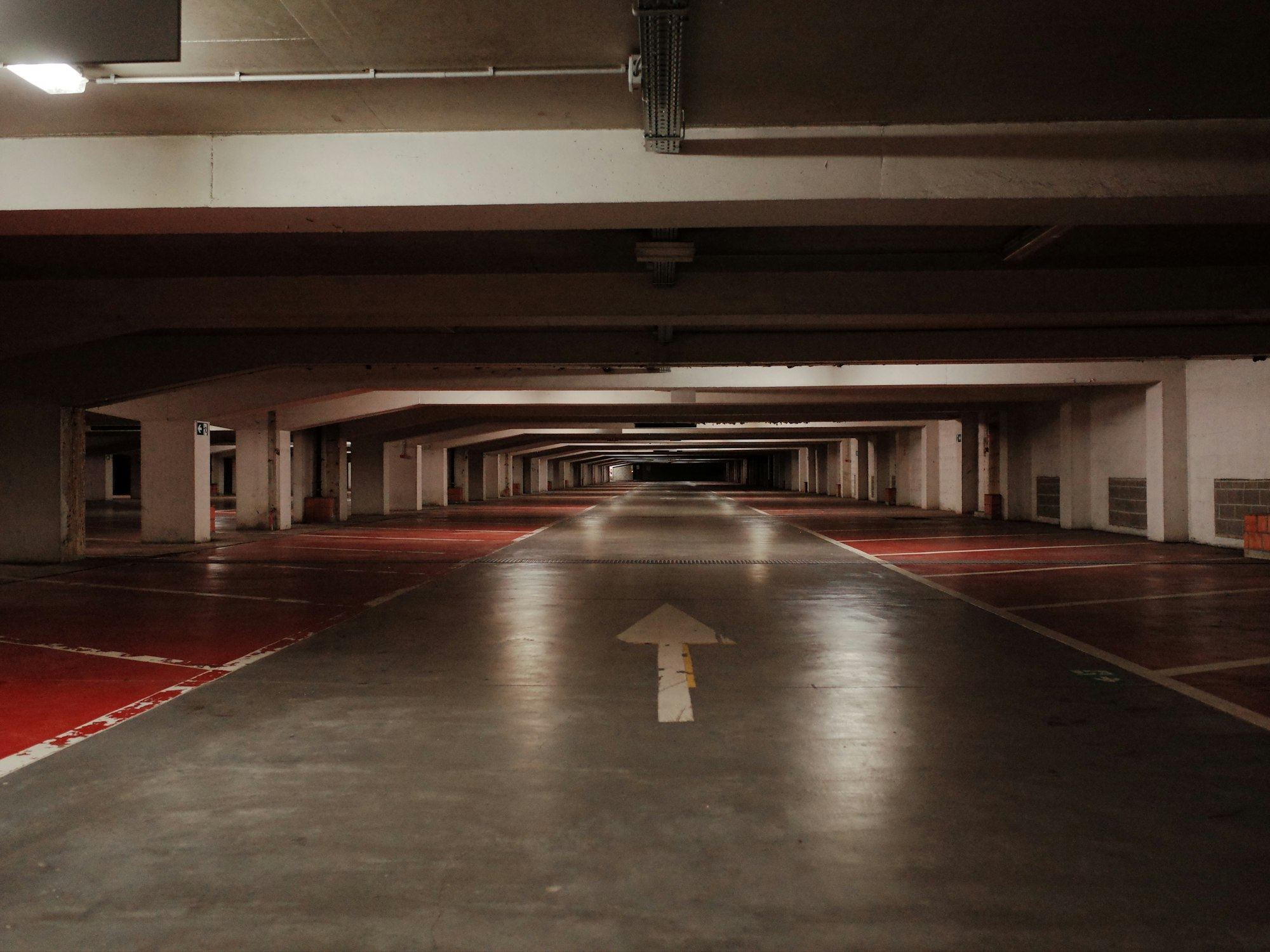
A common approach is to lay a darker tone inside the storage footprint and keep the travel lanes lighter. The contrast defines the edge of the rack zone instantly. When a forklift crosses from the pale aisle into the darker bay, the driver sees the transition without looking for signage.
The choice of pigment depends on what moves through the space. Food factories tend toward pale blue or green because those shades show organic debris clearly. Engineering workshops often use slate or charcoal in work cells to hide oil mist. Whatever the sector, the specialist contractor mixes the resin batch to match the agreed colour chart before application begins. See how <a href="/coatings/warehouse-floor-painting-warrington">warehouse floor painting</a> handles bay layouts.
Marked gangways and pedestrian walkways
Pedestrian routes inside a working unit need more than a change of shade. They need clear edges. A solid band of yellow or white resin along each side of a walkway tells everyone where foot traffic belongs. Anything outside that band is vehicle territory.
Some sites add a textured finish to the walkway itself. An anti-slip aggregate broadcast into the topcoat gives shoes extra grip, especially near wash-down areas or external doors where rain blows in. The texture also signals underfoot that someone has stepped into the pedestrian zone, even if they are not looking down.
Line marking paint wears thin when steel wheels cross it daily. A resin-based gangway colour, applied as part of the main floor coating, sits below the surface level and resists that abrasion far better. When the specialist firm plans the layout, they measure the exact width needed for two people to pass comfortably and mask off the edges before pouring. Read more about <a href="/coatings/floor-line-marking-warrington">floor line marking layouts</a> for these spaces.
Contrasting thresholds at docks and doorways
Loading dock edges are high-risk spots. A pallet truck rolling backward or a driver misjudging the gap between the deck and the lorry bed causes serious accidents. A bright contrasting strip of resin right at the threshold draws the eye to the drop.
Yellow is the usual choice because it stands out against both grey concrete and darker floor coatings. The strip only needs to be around 100mm wide to register in peripheral vision. Some sites extend the contrast colour a metre inward so the warning zone covers the area where workers stand while coupling trailers.
External ramps face weather that internal floors do not. UV exposure fades standard epoxy, so specialists often switch to a polyurethane topcoat for any coloured section that sees daylight. This keeps the contrast sharp for years rather than months. The same logic applies to roller-shutter openings where sunlight hits the floor every afternoon. Check how <a href="/blog/loading-bay-floor-coating-docks-ramps-and-thresholds">loading bay coatings</a> handle these transitions.
Picking a colour scheme for mixed-use workshops
A workshop that houses welding benches, an MOT pit and a parts store has conflicting needs. Welding sparks scar pale floors. Oil drips show instantly on light grey. Yet a completely dark floor makes the inspection pit feel like a cave and hides dropped fasteners.
The answer is usually zoned colour. Dark charcoal or green under the fabrication area hides heat marks and swarf. A lighter tone around the vehicle lift helps mechanics see bolts and brackets underneath cars. The boundary between zones can be a straight masked line or follow the shape of the equipment layout.
Before any colour goes down, the concrete substrate must be sound. Cracks telegraph through thin coatings and ruin the visual effect. If the slab needs levelling first, a specialist will apply a <a href="/coatings/concrete-floor-screeding-warrington">concrete screed</a> to create a flat base. Only then does the chosen pigment deliver the clean finish the plan promised.
What determines the final price per square metre
Colour itself adds very little to material costs. Pigment pastes are inexpensive relative to the resin binder. What drives the price is the number of colours, the complexity of the masking and the total area each shade covers.
A single-colour floor laid in one pour is the fastest job. Every additional zone means another mixing batch, another set of masks and another curing window before the next section can start. Small intricate shapes, like chevron arrows or hazard hatching, take longer to tape out than broad rectangles.
Thickness matters too. A 2mm coating suits foot traffic and light trolleys. Forklift aisles carrying loaded pallets typically need 4mm or more. The specialist firm assesses the loads and recommends a build-up that will not crush under repeated weight. Get a clearer picture of <a href="/before-the-pour/resin-floor-cost">resin floor costs</a> before planning a multi-colour layout.
Tell us about the floor you want to colour
Send the dimensions, the colours you have in mind and what moves across the space. A specialist firm will review the details and respond with advice. There is no charge and no commitment to book work.
- No fee for advice
- No booking required
- Specialist response